Prelude
On literature, languages, and the kind of movement that happens in stillness
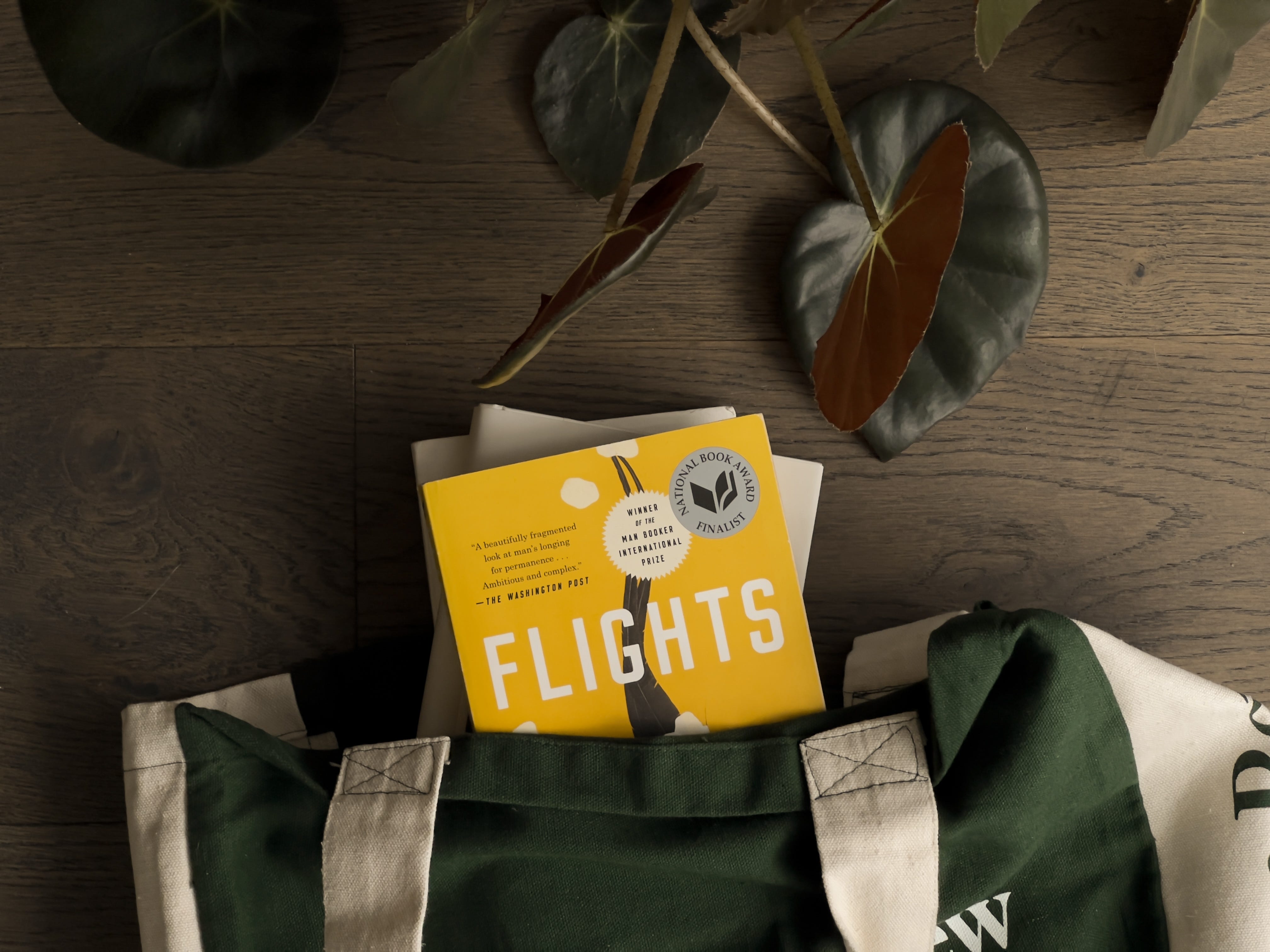
Flights by Olga Tokarczuk had just won the Man Booker International Prize (now called the International Booker Prize), when I moved to Montréal from Toronto. I had just finished my bachelor's degree in computer science, and during my job search, my primary criterion was to move away from my hometown. I was seeking new cultural worlds, with starting my career in a tech hub merely a secondary consideration.
The book was on display at Librairie Drawn & Quarterly, a bookshop I would come to frequent during my year and a half in the city. Its location in Mile End, the bus ride from my Plateau apartment, the slow browse of its thoughtfully curated tables—all of it felt right for the culturally rich life I was building. Drawn in by its bright yellow cover (yellow is my favourite colour) and encouraged by how much I'd loved the previous year's prize-winning novel (The Vegetarian, by Han Kang), Flights came home with me that evening.
I think about this book at least once a year. Tokarczuk's novel meditates on movement: literal travel, but also the intellectual journeys we take through encountering the unfamiliar. What has stayed with me is the narrator's wonder-imbued attention to everything they observe, and this suggests something I deeply believe: the act of noticing is itself a form of travel, and for me this is especially poignant when I experience literature and languages. Not the superficial kind of experience: not consuming books for performance or engaging with languages for gamified streaks, but the kind that requires attention, slowness, and discernment. The kind that lets us transcend physical boundaries and connect across time and cultures—intellectually, emotionally, and spiritually. The kind where stillness becomes motion, where even from my Toronto apartment, I'm traveling.
It's in this spirit that I started Flights Library: a newsletter exploring deep reading, language learning as a cultural gateway, and the daily rituals that support a life of intellectual richness, despite the optimization that my industry—and our broader culture—constantly demands. Twice a month, I'll share what emerges from my practice: what I discover as I read one book deeply rather than five quickly, as I learn languages through grammar books and cultural engagement instead of Duolingo streaks, and as I reflect on and refine this practice itself.
My hope is that sharing this process encourages others seeking similar depth, and gives them permission to pursue it outside of trends, performance, and optimization.
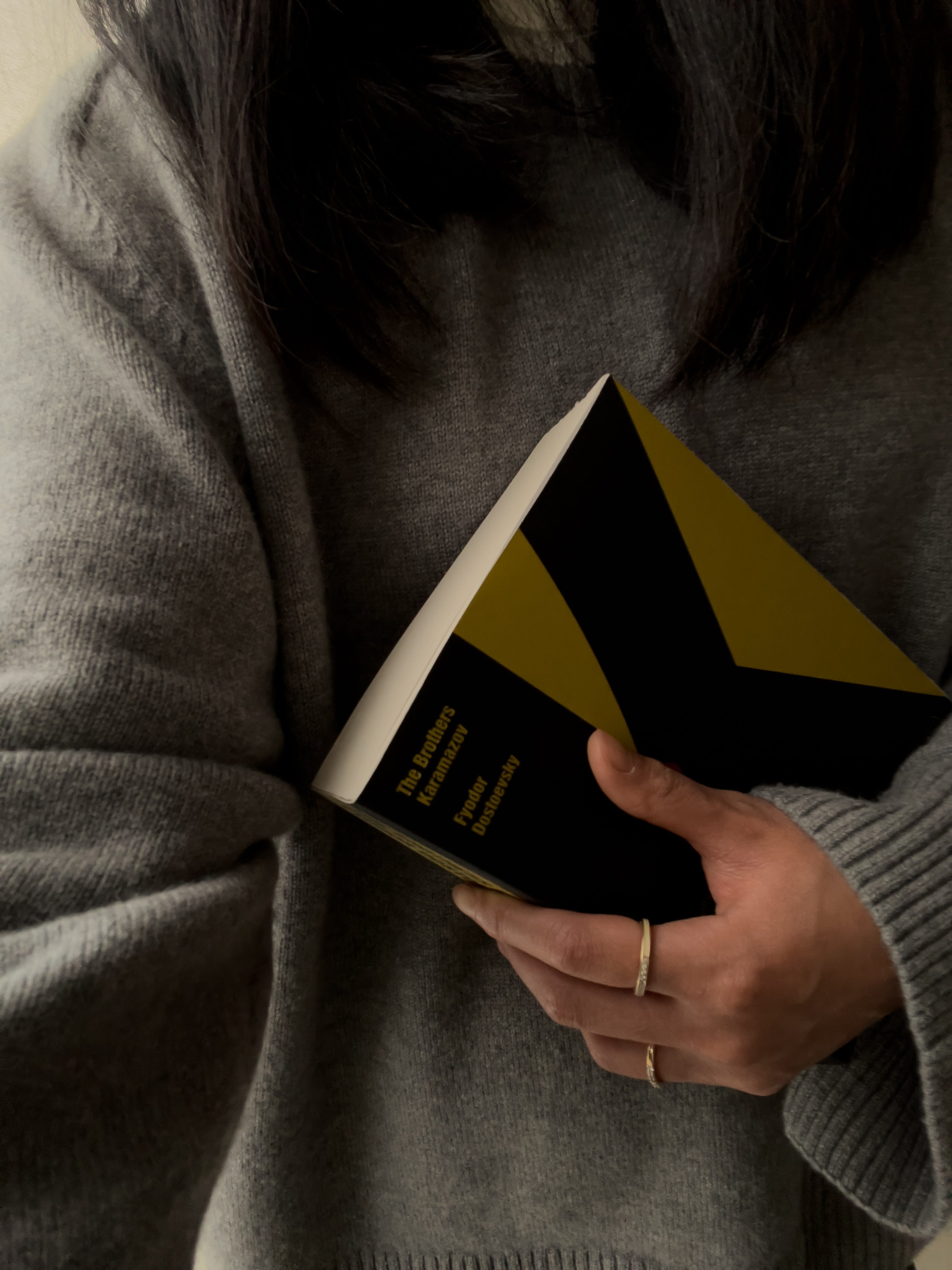
To give you a sense of what this looks like: during this holiday season, I’m continuing my annual tradition of reading a Russian literary classic during my company's year-end closure. This year, I decided that the time was finally right to start The Brothers Karamazov. (In the last two years, I've read Anna Karenina and Eugene Onegin; I'm working my way through the canon.) In the next dispatch, I'll share what comes out of that deep reading.
What are you reading as the year comes to a close? I'd especially love to hear if you're tackling something ambitious, taking your time with something difficult, or returning to an old favourite.
With warmth,
Natalie